Takeaways from the CARE Conference: change takes time and perseverance
We spent four days in Warsaw at the CARE Conference, held on September 17–20. For several NÉGYOSZ colleagues, alongside the presentations, the personal conversations with organisations from many countries proved especially valuable. Several important lessons emerged from them.
At the CARE Conference, we met professionals from many different countries. They all work on different issues and try to achieve results under different circumstances, yet they often reported similar experiences.
Before the conference, we also took part in a related professional meeting.
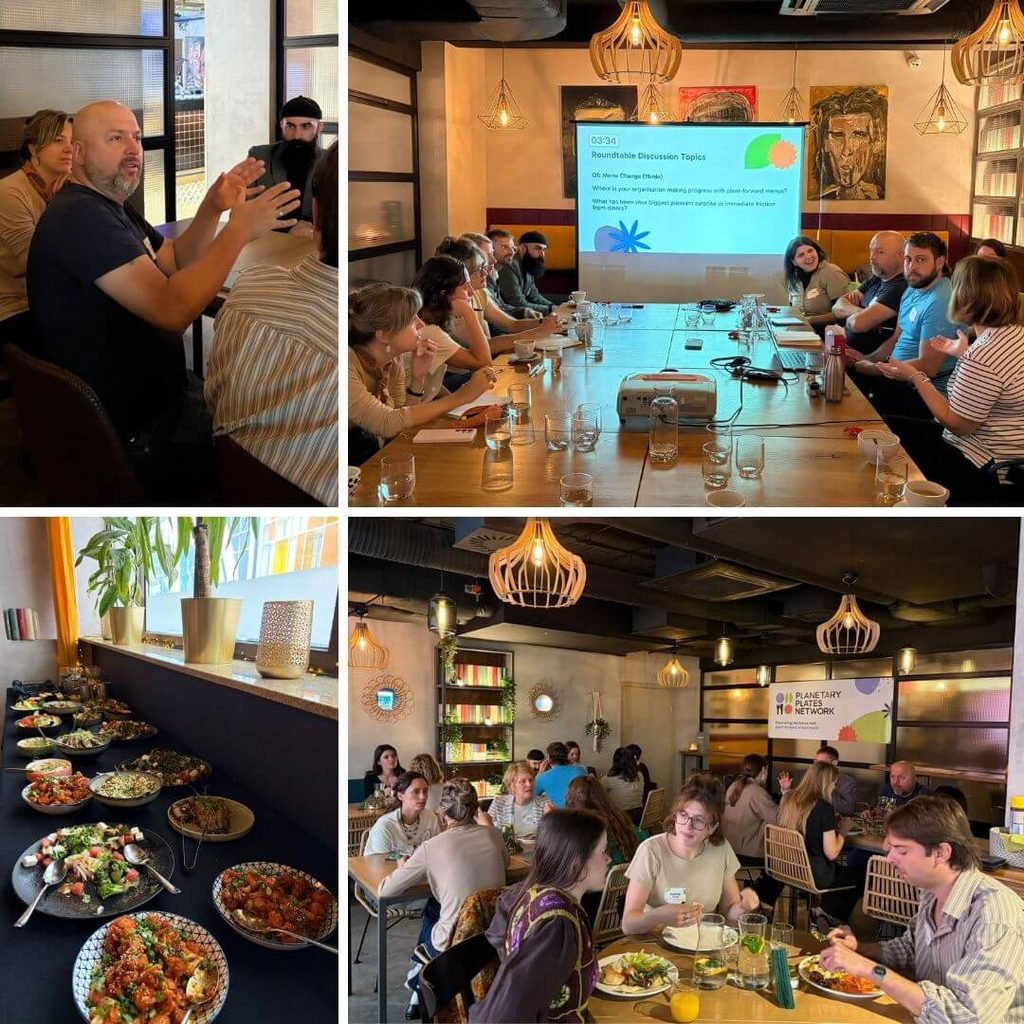
On the morning of September 17, before the CARE Conference opened, our Warsaw programme began with a smaller meeting. It was the first time we sat down in person with the members of the Planetary Plates Network (PPN). The network, coordinated by ProVeg International, connects European organisations working on improving public catering. The meeting was organised by Colette Fox and Yuna Lee, who lead ProVeg’s public catering programme. The morning started with a joint roundtable discussion, followed by short workshops and 1:1 conversations. Almost every country represented at the conference had someone present, and it quickly became clear how different the points are at which we stand: what is already established practice in one place is still a work in progress elsewhere. That is exactly what makes the network valuable for us. Transforming public catering runs into different obstacles in each country, and personal exchange of experience helps us recognise which solutions can inspire our work in Hungary.
Roundtable on long-term policy work
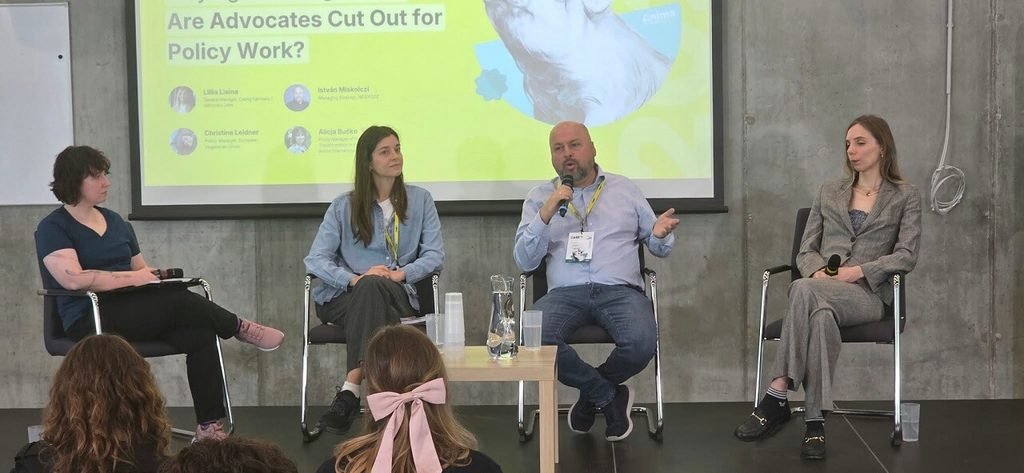
On September 18, István Miskolczi, Managing Director of NÉGYOSZ, took part in one of the conference’s first roundtable discussions. Titled “Playing the Long Game: Are Advocates Cut Out for Policy Work?”, it asked whether advocacy organisations are ready for long-term policy work. The discussion was moderated by Alicja Bućko of Anima International. Alongside István, Christine Leidner of the European Vegetarian Union (EVU) and Liliia Lisina of CellAg Germany presented their views. The participants discussed how a proposal can turn into measurable results, how ambitious a change it is worth asking decision-makers for, and where there is more room for manoeuvre: at national or EU level. The Danish plant-based action plan also came up as an example.
István brought NÉGYOSZ’s Hungarian experience into the discussion: our work on amending public catering regulation and the consultations with the agriculture ministry on preparing a sustainable food strategy. He stressed that lasting results require involving the professional organisations of the agricultural sector, and that economic and public health considerations must also have a place in the negotiations. The discussion also touched on how NÉGYOSZ’s work, as a member of the EVU, connects to advocacy at European level. The participants received István’s contribution positively.
Polish experiences with public catering
Poland, the host country of the conference, sets a good example, as its public catering saw a milestone step forward over the past year. The regulation that entered into force in 2026 requires schools not only to offer plant-based meals regularly, but also to provide a plant-based alternative on meat and fish days. According to the Polish organisations’ experience, achieving this result also required strong public involvement: many people got involved, supporting the change by signing petitions and in other ways.
We have written before about the progress in Polish public catering. In Warsaw, we could now also talk in person with professionals who took part in this work. In a workshop, we were able to ask them in more detail which steps led to wider availability of plant-based meals in schools, and what difficulties they met along the way. For us, these meetings mean more than learning about a good example. They give us the chance to understand what worked in another country (similar to Hungary in many respects), what required broader cooperation, and which experiences can be useful in our work at home.
Reaching out to the public
Another important lesson from the conversations concerned how to reach the public. Not everyone is moved by the same arguments. Some people are drawn towards plant-based meals by the environmental impact of food production, others by health considerations, and there are those who change their lifestyle out of a wish to protect animals. Through different approaches, more people can join the change.
At the conference, three topics dominated the plant-based sessions:
- Measuring impact
At the “Effective plant-forward interventions” workshop, concrete cases were discussed: the school catering coalition of the Polish Green REV Institute, the EVU’s EU plant-based action plan campaign, and the Albert Schweitzer Stiftung’s public catering comparison report. - Retail
Madre Brava and ProVeg Nederland spoke about how to ask supermarket chains for commitments on the ratio of plant to animal protein. - Self-reflection
Tobias Leenaert (ProVeg International) and Jan Dutkiewicz (Pratt Institute) discussed whether plant-based advocacy needs a new approach. In the background, the Polish example was present in all three topics.
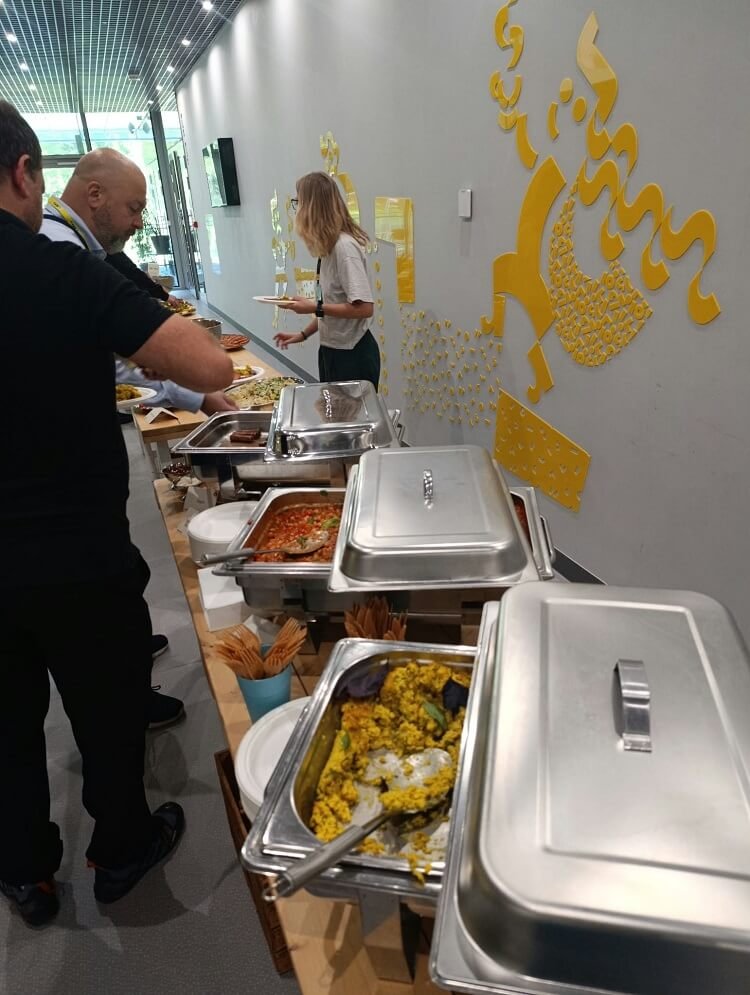
Besides the CARE presentations and workshops, the organised meetings and informal conversations also helped with networking. The abundant plant-based food was part of the four days too: breakfasts, lunches, snacks and desserts awaited the participants, and the closing-day brunch featured, among other things, pancakes, tofu scramble and various spreads.
NÉGYOSZ’s position: we returned from Warsaw reinforced
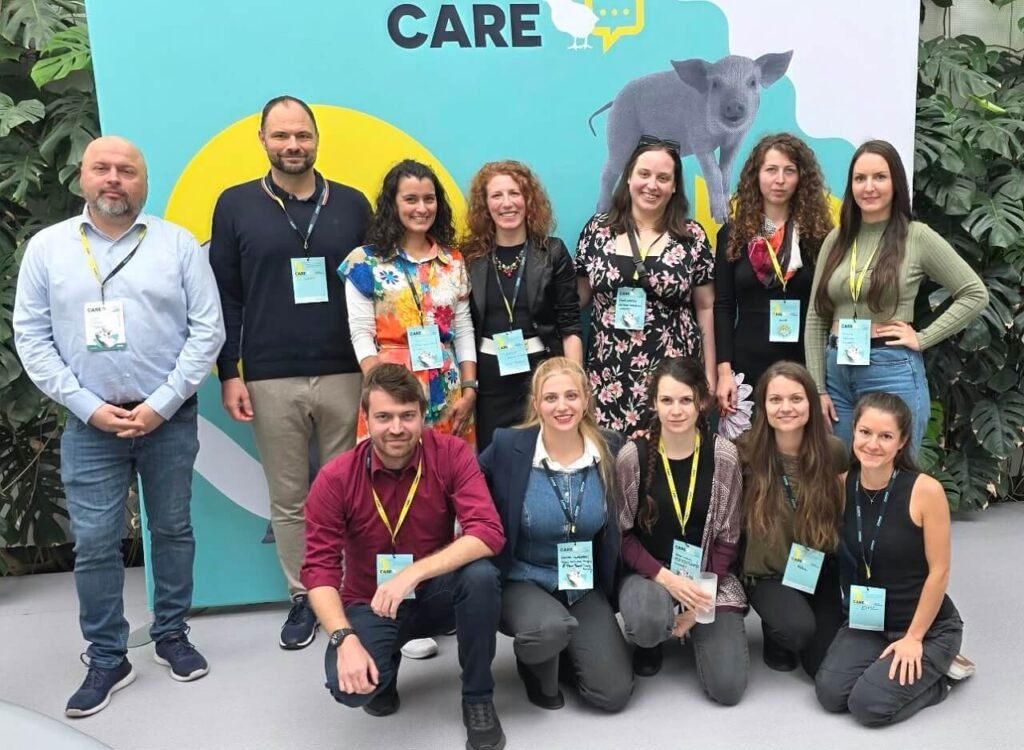
In addition to NÉGYOSZ, several other organisations from Hungary also took part in the conference. We all agreed that behind the results achieved in other countries lies the long, patient work of many persevering people. There are setbacks along the way, and individual steps sometimes seem small, but experience shows that it is worth continuing cooperation, dialogue and professional work. We therefore plan to use the connections made and the experience gained at the conference in our public catering proposal and in our strategic work.
You can read about the lessons and experiences of last year’s CARE Conference by clicking here.
(Featured image: István Miskolczi also took part in a roundtable discussion, photo: NÉGYOSZ)